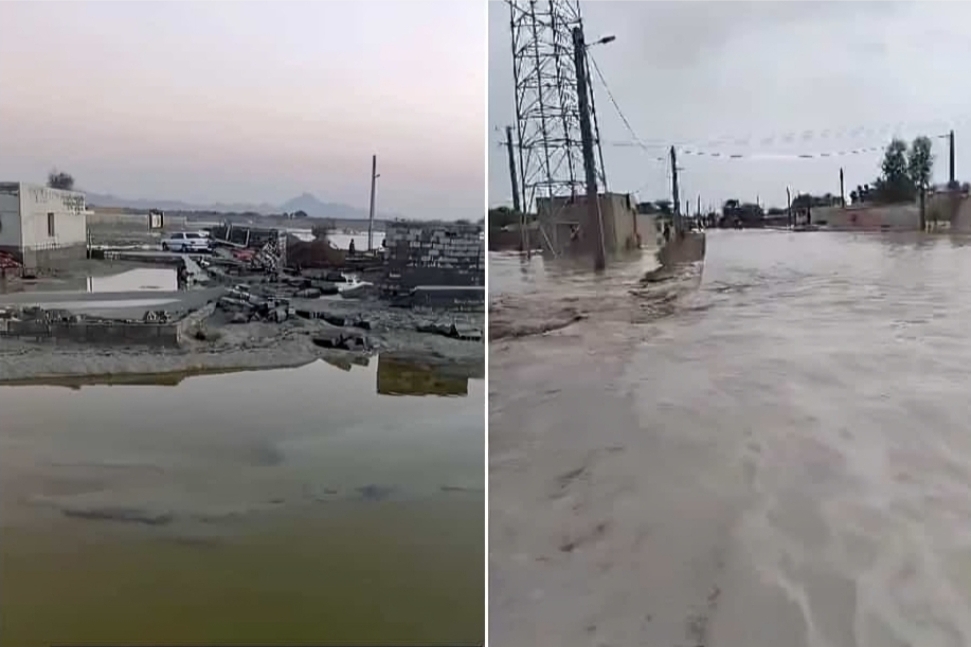
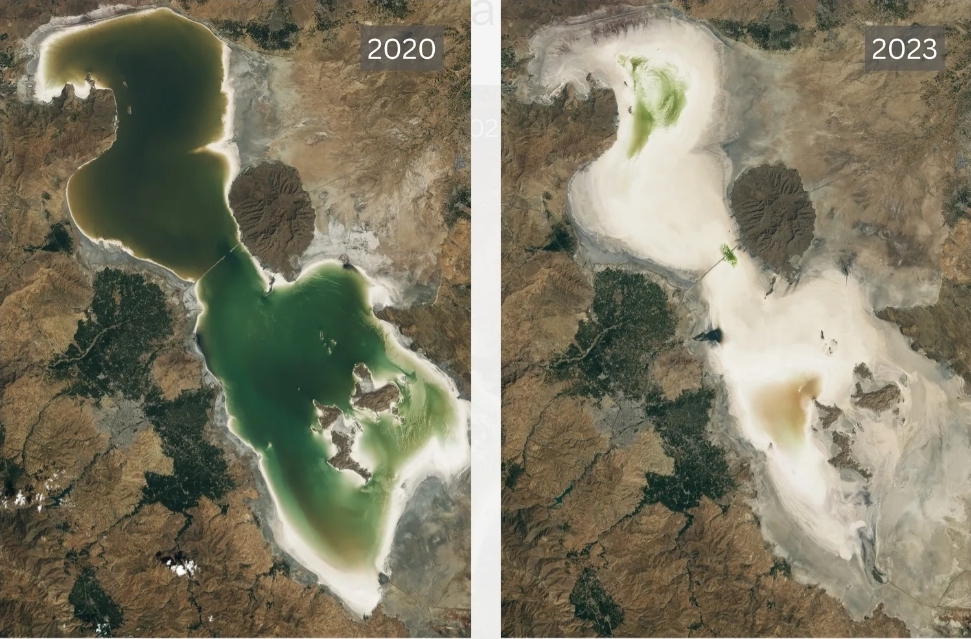
Iran’s Enduring Water Crisis: Decades in the Making Iran has faced severe, multi-year droughts since at least the early 2020s. By late 2025, the country was in its fifth or sixth consecutive dry year. Rainfall plunged 85-89% below long-term averages in autumn 2025—the driest fall in 50 years—depleting reservoirs, drying rivers, and forcing water rationing in Tehran. Lake Urmia, once Iran’s largest lake, shrank dramatically, turning into a salt bed and sparking dust storms. Experts attribute this to a combination of factors: climate change (rising temperatures and shifting precipitation patterns), chronic mismanagement (over-extraction of groundwater via illegal wells, inefficient agriculture consuming 90% of water), population growth, and urbanization. By November 2025, President warnings included potential evacuation of Tehran. Iran responded by launching its own cloud-seeding flights over the Urmia basin—the first in the water year—using aircraft to disperse silver iodide or salts into clouds. These efforts produced some heavy rains and flash floods in western provinces by mid-November 2025, as dry, compacted soil from prolonged drought failed to absorb sudden downpours. Dams overflowed locally, but the national crisis persisted into 2026.
The “Cloud Stealing” Accusations: A Regional Rivalry Iran has repeatedly accused Gulf neighbors—primarily the UAE, Saudi Arabia, and Turkey—of “stealing” its rain through weather modification. These claims date back years: – In 2018 and 2022, Iranian officials and media alleged Israel and the UAE diverted clouds. – By 2025, some Iranian figures escalated to blaming the US and Israel for deliberate drought engineering. Iran’s Meteorological Organization has officially rejected “cloud stealing” as impossible with current technology, noting clouds cannot be relocated over long distances. Meanwhile, Gulf states openly run cloud-seeding programs. The UAE pioneered large-scale operations in 2010, deploying aircraft with hygroscopic flares (salt-based) and later nano-materials. Studies by UAE researchers estimate 10-35% rainfall enhancement in seeded areas, with one peer-reviewed analysis showing a ~23% average annual increase over targeted zones (based on radar and gauge data from 2011 onward). Saudi Arabia reported successes in 2025. These programs aim to boost local precipitation in arid zones but operate on a localized scale—targeting specific clouds within national airspace.
The 2026 Iran war Strikes: What Actually Happened? In March-April 2026, amid the “Ramadan war” escalation, Iran launched hundreds of missiles, drones, and cruise missiles at targets in the UAE (and Bahrain). Official reports confirm strikes on data centers (AWS, Oracle), aluminum facilities (Emirates Global Aluminium), petrochemical plants, and other infrastructure—not dedicated cloud-seeding sites. A now-deleted post on X from Iran’s embassy in Afghanistan claimed a strike on a “secret UAE cloud-seeding and climate change center” triggered regional rains and a temperature drop. Viral posts amplified this, linking it to US radars (e.g., AN/FPS-132 systems) supposedly used for weather disruption. Independent analyses and prior fact-checks found no evidence of strikes on weather facilities. Targets were tech and industrial sites tied to US interests.
The Rains Return: Timing, Video Evidence, and Natural Explanations By April 2026—shortly after the strikes—heavy spring rains hit Iran and parts of the region. Videos like the one in the viral post showed dams (e.g., Darian) overflowing for the first time in 7 years, with spillways releasing water amid flooding. Coincidence or causation? Proponents argue disruption of UAE cloud seeding or “rain-blocking radars” allowed moisture to reach Iran. A Substack analysis reviewed UAE programs and noted the correlation: seeding halted, rains returned. However, scientific consensus rejects large-scale cross-border effects: – Cloud seeding enhances existing clouds locally (within tens of km) by 10-30% at best. It cannot “divert” weather systems hundreds of kilometers away or suppress rain over entire countries. – Studies on UAE operations confirm benefits are modest and variable; massive 2024 Dubai floods were driven by natural climate-amplified storms, not seeding. – Iran’s own 2025 seeding produced similar “sudden” floods after drought—exactly as in April 2026. Dry soil + intense rain = flash flooding, regardless of cause. Spring 2026 rains align with natural variability. Regional weather patterns (e.g., Mediterranean systems) often deliver relief after prolonged dry spells. Broader 2026 precipitation data showed modest recovery across Iran (up ~2% in some water-year totals), consistent with cyclical shifts rather than engineered reversal.
Historical Parallels: Weather Modification Myths Claims of weaponized weather are not new. The US ran Project Popeye (1960s) to extend monsoons in Vietnam—limited tactical success, not continental control. Modern programs remain experimental and small-scale. No declassified evidence supports Gulf or US programs “starving” Iran. Similar conspiracies followed Dubai’s 2024 floods or California’s storms: seeding blamed despite models predicting extreme natural events.
Conclusion: Geopolitics Meets Meteorology The viral claim resonates because Iran’s water crisis is real, its accusations longstanding, and the timing of April 2026 rains suspiciously convenient amid war. Striking Gulf infrastructure may have disrupted *some* operations symbolically, but physics limits cloud seeding’s reach. No credible evidence shows “rain-seeding facilities” were hit or that their disruption caused nationwide relief. Instead, the rains likely reflect natural weather patterns ending a drought cycle—exacerbated by Iran’s own seeding efforts and the region’s shared arid climate. The narrative distracts from root causes: poor water governance, overpopulation pressures, and climate change affecting the entire Middle East. As one UAE researcher noted amid past accusations, “Clouds don’t respect borders—but neither does drought.” Regional cooperation on water, not conspiracy, offers the real path forward. The dams are overflowing today; sustainable management will determine if they stay that way tomorrow.