India’s Ethanol Blended Petrol (EBP) Programme, launched in 2003, has achieved a major milestone. The target of 20% ethanol blending (E20) in petrol was met in December 2025 — five years ahead of the original 2030 deadline. From April 1, 2026, E20 petrol with a minimum Research Octane Number (RON) of 95 became mandatory across the country.
Ethanol production capacity has surged to nearly 20 billion litres, well above the ~11 billion litres required for nationwide E20 blending. This expansion, supported by policy incentives, diversified feedstocks (sugarcane, maize, and surplus rice), and infrastructure growth, has delivered substantial benefits. Cumulative foreign exchange savings stand at over ₹1.6–1.7 lakh crore since 2014–15 through reduced crude oil imports. Farmers have received payments exceeding ₹1.4–1.5 lakh crore, boosting rural incomes. The programme has also cut net CO₂ emissions by approximately 830–870 lakh metric tonnes and substituted over 280 lakh metric tonnes of crude oil.
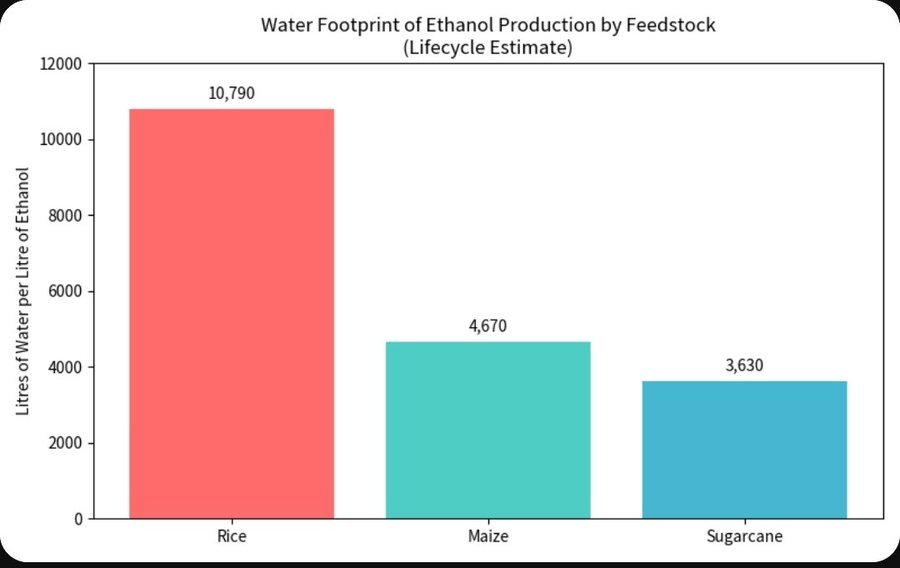
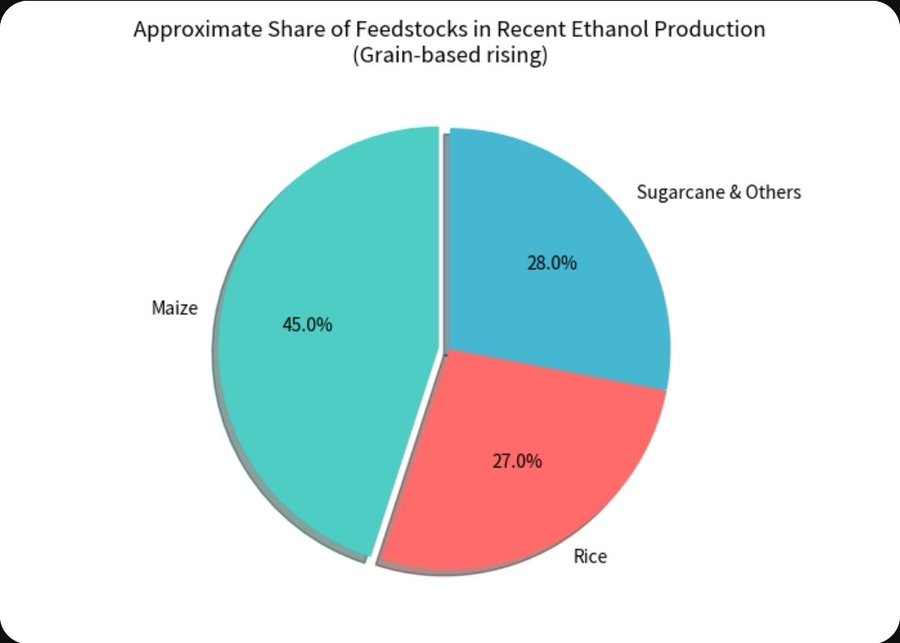
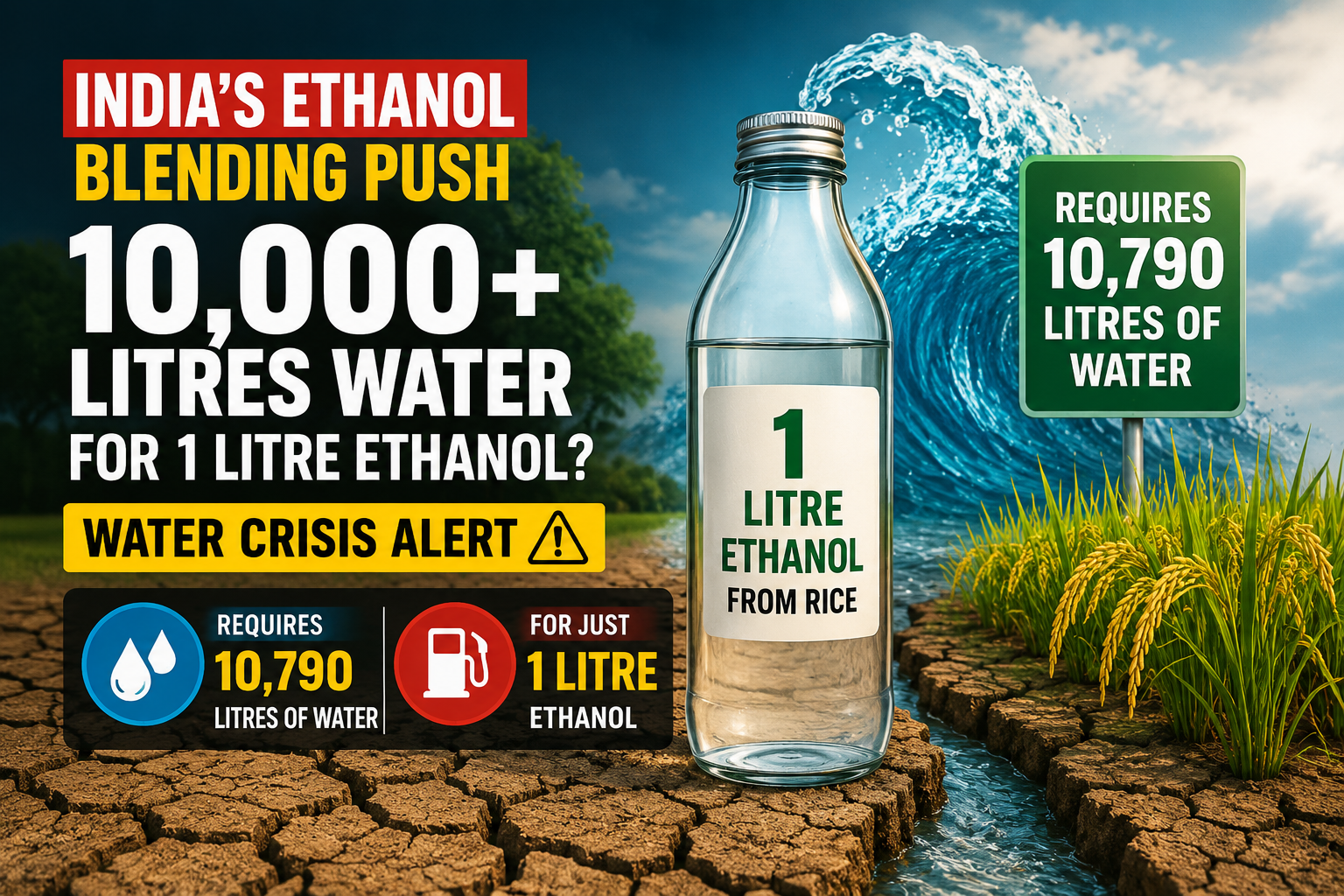
However, sustainability concerns are mounting due to the high-water footprint of key feedstocks. Government data shared by Food Secretary Sanjeev Chopra shows the lifecycle water requirement (including irrigation) per litre of ethanol as roughly 10,790 litres from rice, 4,670 litres from maize, and 2,860–3,630 litres from sugarcane. Distillery processing uses only 3–5 litres. With maize now accounting for about 45% of feedstocks and rice 27%, the programme risks accelerating groundwater depletion in water-stressed states like Maharashtra, Punjab, and Uttar Pradesh. It also raises food-versus-fuel trade-offs, especially during monsoon failures, and may shift cropping patterns unsustainably.
While E20 strengthens energy security and supports cleaner tailpipe emissions, unchecked reliance on water-intensive first-generation (1G) crops threatens long-term water and food security. Experts recommend prioritising second-generation (2G) ethanol from agricultural residues, widespread adoption of drip irrigation and precision farming, and comprehensive water audits. A balanced roadmap toward higher blends (E25–E100) with sustainable practices is essential to realise the full potential of India’s biofuel ambitions without compromising natural resources.