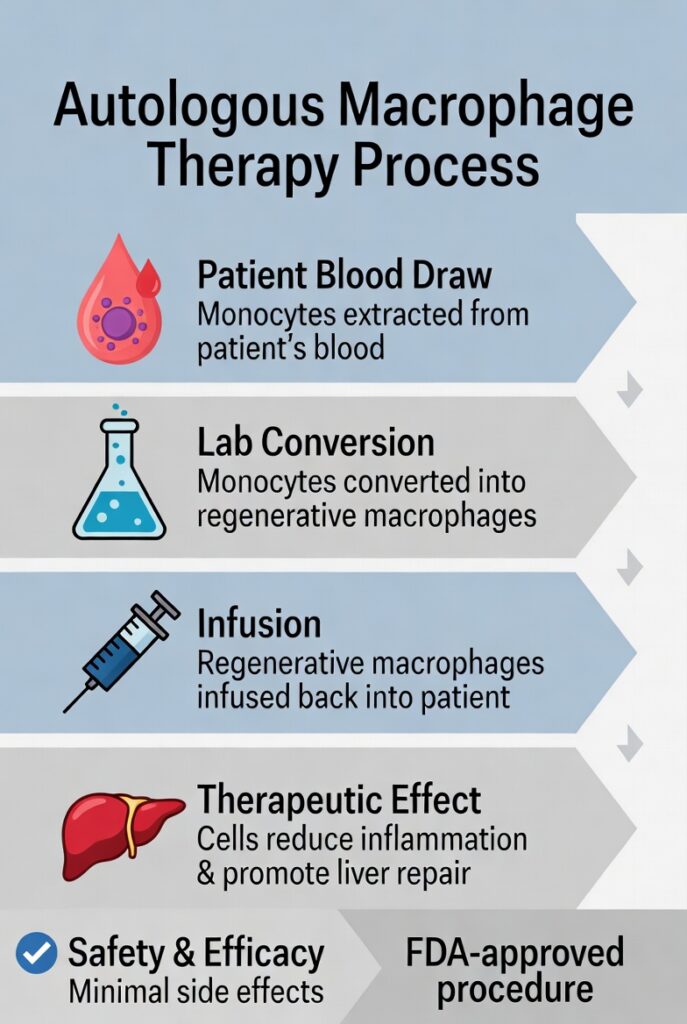
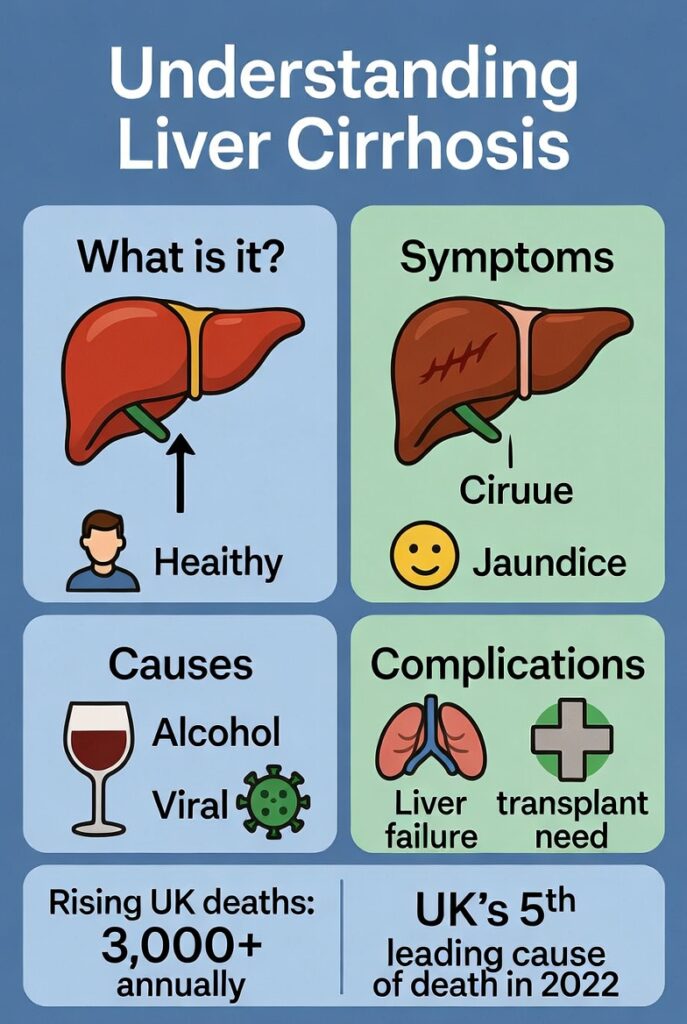
Liver cirrhosis, a leading cause of death worldwide with rising cases in the UK, involves scarring that impairs liver function and often leads to transplant or fatality. A pioneering autologous macrophage therapy developed at the University of Edinburgh offers new hope. In the MATCH Phase 2 randomized controlled trial, researchers treated 27 patients with compensated cirrhosis (MELD score 10–17) using their own monocyte-derived macrophages. Patients received infusions of these regenerative cells, which reduce inflammation, resolve fibrosis, and promote liver repair—unlike standard medical care given to 24 controls. The primary endpoint (change in MELD score at 90 days) narrowly missed statistical significance (ΔΔMELD -0.87, p=0.06), with no major differences in short-term biomarkers or quality of life.
However, safety was excellent: no liver-related serious adverse events or deaths in the treatment group during 1-year follow-up, compared to 10 severe events and 3 deaths (2 liver-related) in controls. Exploratory data revealed favorable anti-inflammatory cytokine shifts. Long-term follow-up (up to 4 years, published in Cell Stem Cell) was even more compelling. Transplant-free survival reached ~70% in treated patients versus ~40% in controls. Treated patients faced a 61% lower risk of death or transplant (HR 0.39, p=0.035), gaining an extra 252 days of restricted mean survival time on average. No therapy-related serious adverse events emerged.
This autologous approach (using patient-derived cells) paves the way for Resolution Therapeutics’ engineered successor, RTX001. The ongoing EMERALD Phase 1/2 trial is now recruiting patients with end-stage liver disease to test this enhanced therapy, aiming to reduce reliance on scarce donor organs. While larger confirmatory trials are needed, these results mark a significant advance in regenerative medicine for a condition with limited options.