
May 30th, 2025
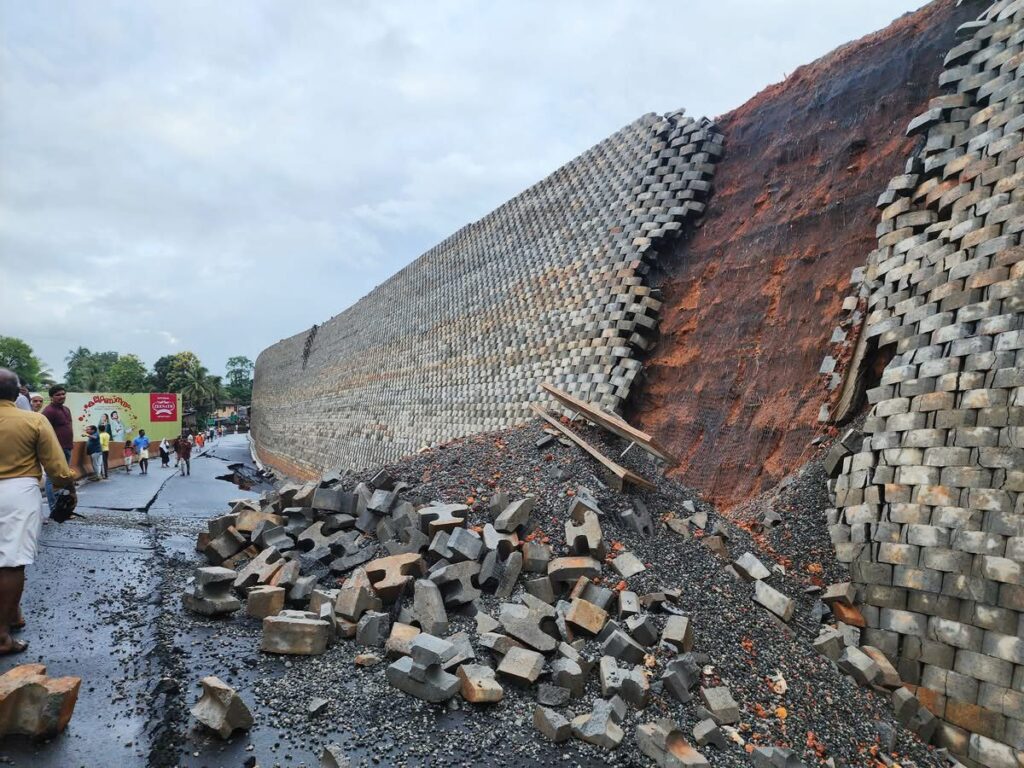
On May 19, 2025, a newly built section of National Highway 66 (NH-66) in Kooriyad, Malappuram, Kerala, collapsed during pre-monsoon showers, laying bare critical flaws in construction quality and planning. The incident, which damaged a service road, a retaining wall, and three vehicles, has ignited public outrage and raised urgent questions about the National Highways Authority of India (NHAI)’s oversight, contractor accountability, and the resilience of India’s infrastructure projects. As similar failures emerge across other stretches of the highway, the collapse underscores the need for systemic reform to ensure roads can withstand Kerala’s relentless monsoon.
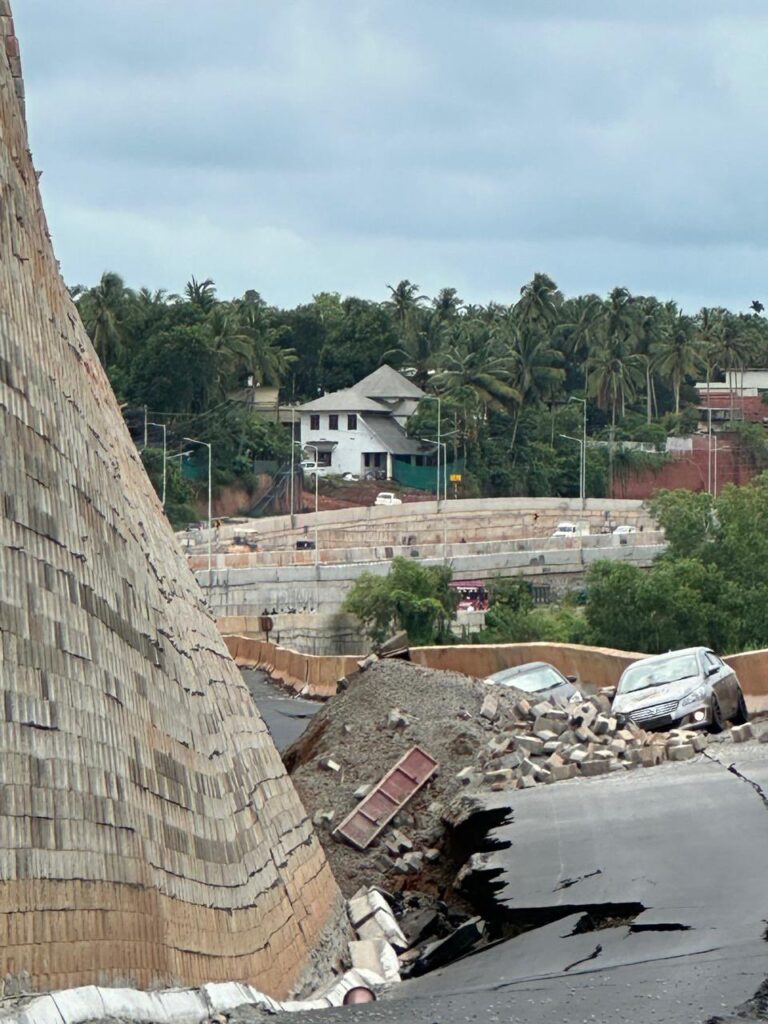
The collapse occurred on the Ramanattukara-Valanchery stretch of NH-66, a key segment of the 1,600-km highway linking Mumbai to Kanyakumari. Built over a reclaimed paddy field near the Panampuzha bridge, the elevated highway section gave way, crushing a car on the service road below. No fatalities were reported, but the incident caused chaos, with fresh cracks appearing the next day at Thalappara, Malappuram, and Malaparamba, Kozhikode. In Kasaragod, a service road at Chemmattamvayal also caved in, highlighting widespread structural issues.
The NHAI attributed the collapse to “pore water pressure” in the waterlogged soil, which created a cavity beneath the road. However, with the stretch 95% complete and slated for a June 2025 inauguration, the failure has fueled skepticism about the project’s integrity. Social media platforms like X have erupted with criticism, with users calling the collapse a “waste of taxpayers’ money” and demanding accountability for shoddy work.
Locals had long warned the NHAI and contractor KNR Constructions Ltd. about the risks of building on waterlogged paddy fields. AR Nagar grama panchayat’s former president, Kavungal Liyakath Ali, revealed that residents advocated for an elevated pillar structure to mitigate flooding risks near the Panampuzha and Kadalundipuzha rivers. “We told them the soil couldn’t hold, but they ignored us,” Ali said. Tirurangadi Municipality Chairman KP Muhammed Kutty noted that the collapse occurred before the peak monsoon, raising doubts about the highway’s durability. “A flyover was the only sustainable option,” he argued.
Edarikode Panchayat President Jaleel pointed out that much of NH-66 traverses low-lying, flood-prone areas, making such failures predictable without robust engineering solutions. A petition filed in the Kerala High Court by resident Nasar Malayil further alleged alignment issues in a nearby bridge, pointing to deeper planning flaws.
KNR Constructions Ltd., responsible for the Ramanattukara-Valanchery stretch, faces intense scrutiny for alleged substandard work. Vengara MLA P.K. Kunhalikutty accused the contractor of unscientific practices, prompting Union Minister Nitin Gadkari to blacklist KNR Constructions and consultancy firm Highway Engineering Consultant (HEC) from NHAI tenders for two years. An expert committee, led by retired IIT-Delhi professor G.V. Rao, is investigating the collapse and auditing the 77-km stretch. Early findings suggest a faulty Detailed Project Report (DPR), raising questions about the NHAI’s oversight.
The collapse is not an isolated incident. Cracks have appeared in NH-66 stretches in Thiruvangoor, Ambalapadi, Chavakkad, and Taliparamba, while construction-related soil erosion in Kasaragod has flooded homes, sparking protests.
The NH-66 project has drawn criticism for its environmental impact. Reclaiming wetlands and neglecting drainage systems have worsened flooding, polluting wells and damaging homes in Malappuram. Residents like Illickal Majeed, who lost ancestral land to the project, report flooded properties and cracked structures. Environmentalists argue that Kerala’s heavy rainfall and soft soil demand tailored designs, such as elevated structures and robust drainage, which have been largely absent.
The NH-66 collapse is a wake-up call for India’s infrastructure sector. To prevent future failures, the NHAI must enforce rigorous site assessments, high-quality materials, and climate-resilient designs. Transparent investigations and stricter contractor accountability are critical to restoring public faith. With the monsoon season looming, urgent repairs and a comprehensive safety audit are needed to ensure NH-66 can deliver on its promise of connectivity.
The washed-away highway is more than a physical failure—it’s a symbol of systemic lapses that India can ill afford. As the nation pushes for modern infrastructure, the lesson from Kooriyad is clear: roads must be built to endure, not crumble under the first rain