17 Aug 2025
By Rohini Srikumar
In the world’s most populous country, where even human life can seem undervalued, animal welfare often slips further down the priority list. But Hon’ble Supreme Court’s cognisance of a news report highlighting the issue of stray dog attacks, particularly affecting children and the elderly in Delhi, could be a turning point. It could be an opportunity to recognise that protecting human safety and upholding the rights of animals are not mutually exclusive. Prominent animal rights activists like Menka Gandhi, Gauri Maulekhi, Seema Rahmani, Rakesh Shukla, etc., correctly point out that Delhi lacks the infrastructure to safely house and care for so many animals. But that is exactly the point: we must begin building it. There are many middle-class people in cities like Mumbai who, on their meagre incomes, have rescued, fed, and treated injured street animals even during COVID-19. Some even exhausted their life savings to do it, but the point is that they did it. If we, as a society, claim dominion over nature, enjoying secure housing, transport, and amenities, shouldn’t we also take full responsibility for the creatures displaced by our expansion?
The rapid surge in human population and the relentless humanisation of nature have pushed animals to the margins. Intensifying concretisation, rising vehicle density, and vanishing green spaces have turned streets into death traps for stray dogs. To assume they are ‘better off’ on the streets is a comforting fiction, one that ignores the violence, disease, and starvation they face daily.
The Issue
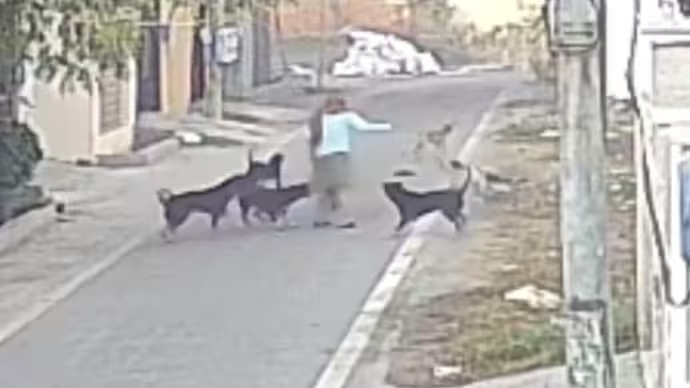
Delhi has struggled with a rising stray dog population, which is estimated at 1.8 lakh in 2019 according to the 20th Livestock Census (GoI, 2022), with the number likely higher now due to incomplete sterilisation programmes (Times of India, 2025; Richhariya, 2025). Between 2020 and 2023, barely 21,000 dogs were sterilised, far short of the levels required to control the population (Mukherjee, 2025; Richhariya,2025). Dog-bite incidents have kept pace. Government hospital records indicate 14,000+ cases in 2015, rising to over 18,000 in 2022, with more than 11,000 cases reported in the first seven months of 2025 alone (Narayan, 2025). According to official data, reported cases of dog bites in January 2025 amounted to approximately 3,196 in Delhi and 429,664 across India (Suo Moto Writ Petition (C) No. 5, 2025). These are not mere statistics; they represent lives altered, sometimes permanently, by preventable attacks.
The Order
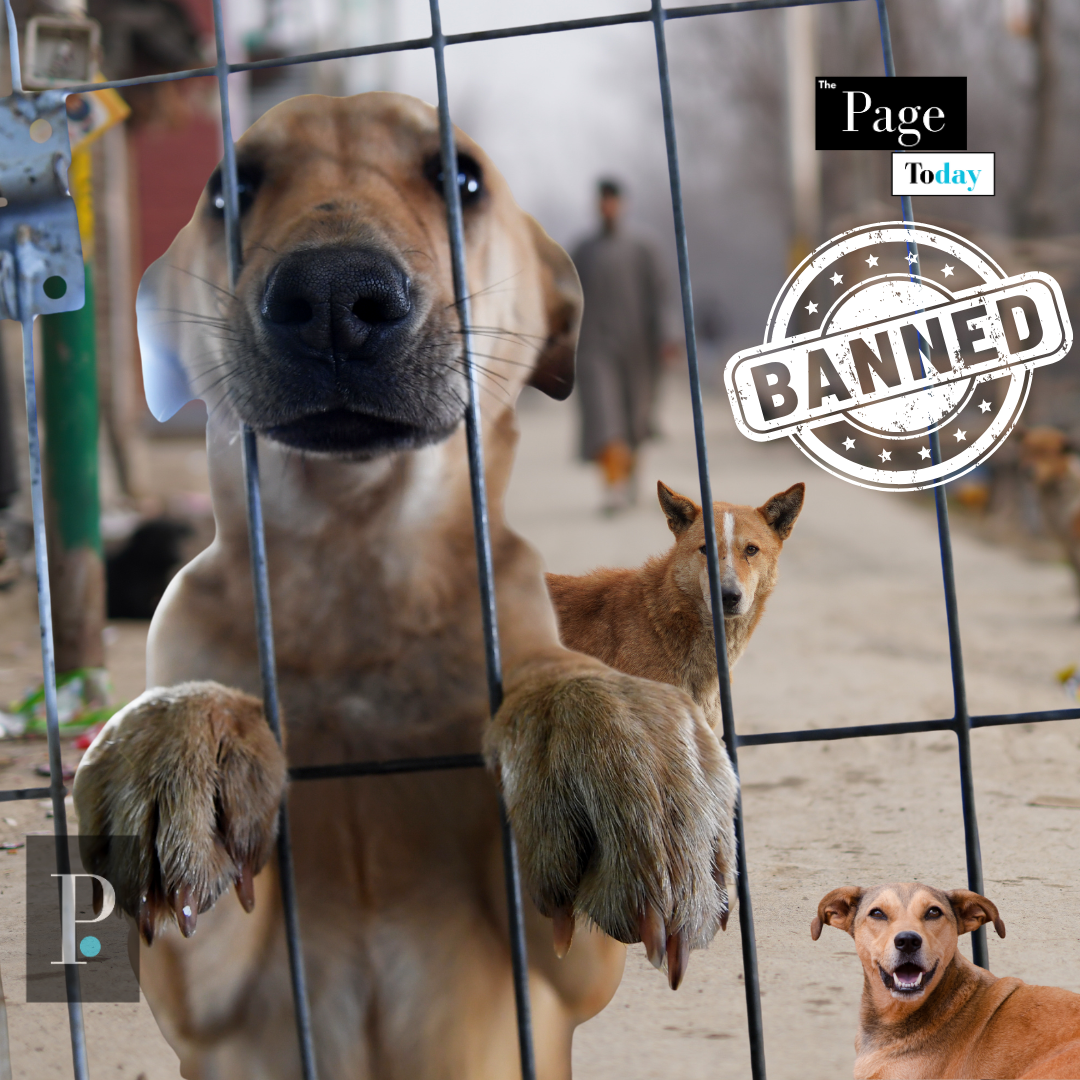
On August 11, 2025, a two-judge bench of the Hon’ble Supreme Court directed the civic authorities in the Delhi-NCR region to remove all stray dogs from public streets and relocate them to shelters within eight weeks (Suo Moto Writ Petition (C) No. 5, 2025). The order did not license cruelty; instead, it signalled an urgent push for municipal bodies, particularly the Municipal Corporation of Delhi (MCD), to shake off their inertia and address an escalating crisis.
Significance of the Order
This is not a ban on dogs in public spaces. It is, rather, a nudge for the municipal authorities to take both human safety and animal welfare seriously. The Court’s order recognises that the problem is twofold. Particularly in low-income areas, citizens remain at risk, and the animals themselves live in unsafe, inhumane conditions on increasingly hostile streets. Through this judgment, the apex Court didn’t simply address a dispute between animal lovers and those who fear stray attacks. It did something far more urgent: it spoke for those whose voices are rarely heard — the daily wage earners, the sanitation workers, the rickshaw pullers, the children walking to school. They are the ones who cannot retreat behind high walls, gated compounds, or security guards when a pack of aggressive strays chases them down their streets.


This order is not a licence to kill, nor an excuse for cruelty. It is a mandate for municipal authorities to finally shed their complacency and proactively engage in the process of creating safe, humane, regulated spaces for street dogs. Places where they can be vaccinated, fed, and cared for without endangering human life. The Hon’ble Supreme Court has, in effect, told our cities to stop leaving this to charity, to the goodwill of scattered feeders, or to uncoordinated NGOs. The authorities must stop pretending that the problem will fix itself.
Glaring Limitations and Potential Ways Forward
Even though the order directs the desperately needed attention towards the ongoing human-animal conflict in urban cities, it is undermined by serious and persistent limitations.
It fails to reconcile the conflicting realities of urban India, where unregulated feeding points can escalate conflict, with the urgent need to protect a sentient species from cruelty. There is no binding timeline for municipalities to create designated feeding zones, no mechanism to monitor their upkeep, and no penalty for non-compliance by civic authorities. Without these, the judgment risks becoming a lofty sentiment divorced from ground reality.
Judicially, the Court must issue continuing mandamus orders, appointing expert committees to periodically review compliance, much as it has done in environmental matters. Administratively, state governments should be directed to integrate animal welfare into urban planning laws mandating green corridors, shelter funding, and municipal feeding protocols as non-negotiable infrastructure, alongside clear accountability for enforcement. Without such systemic integration, the spirit of the judgment will remain tokenistic, while the streets stay as hostile to animals as they are indifferent to their suffering.
An Army of Hypocritical Critics
Across the country, numerous citizens who have earnestly worked to create environments safer for both humans and animals have voiced strong apprehension over this order. However, some have hijacked this debate without incurring any personal risk. Tellingly, the most amplified voices often belong to celebrities and elites who rarely venture beyond their glass houses and chauffeur-driven cars. Many self-proclaimed animal lovers, frequently owners of exotic dog breeds, are now weighing in on the matter.


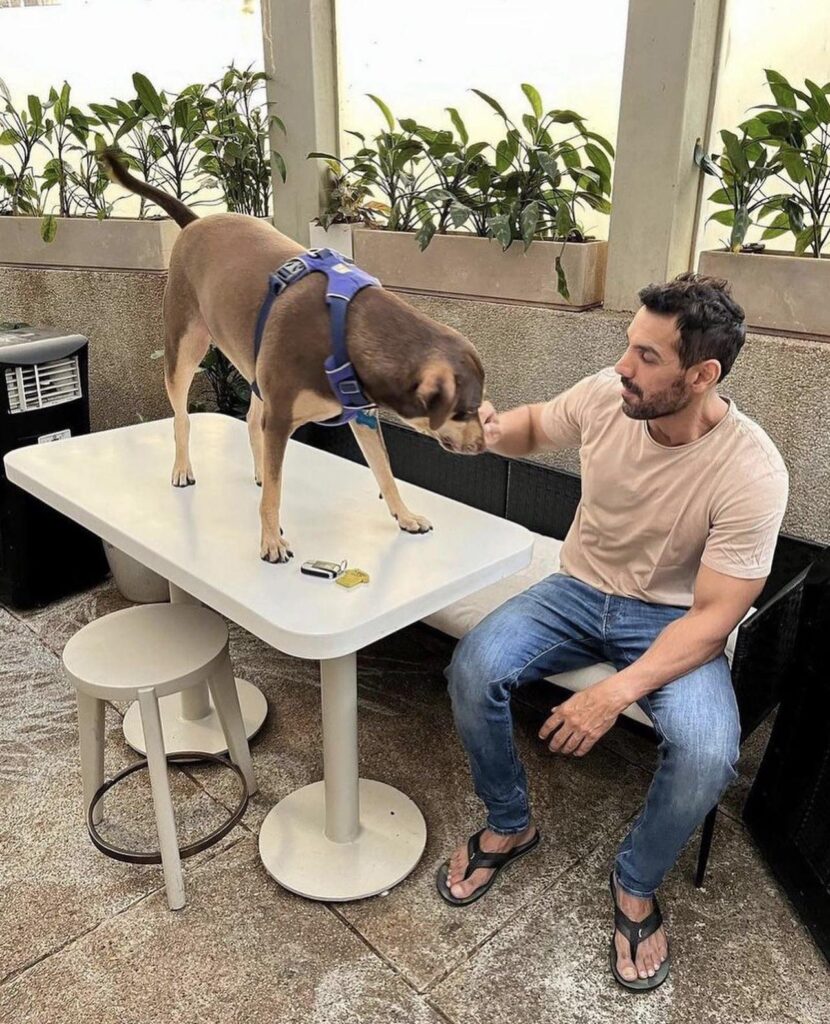
Celebrities like John Abraham (Das, 2025), Sharmila Tagore (NDTV Youtube, 2025), Varun Dhawan, Jahnvi Kapoor and Sara Ali Khan — do they step out into the narrow lanes of our cities alone at night? Do they have to walk past snarling dogs in dimly lit alleys after a late shift? Or do they return to their sprawling, guarded properties? Sharmila Tagore’s Pataudi palace sits on 10 acres. What experience does that give her of the cramped, dog-filled lanes of a slum? What right do these elites have to steer the conversation when the lives of poor people hang in the balance? When a municipal worker loses an arm to a rabid bite, there is no press conference, no glamorous Instagram post. But let a municipal authority try to relocate or manage strays, and suddenly the outrage flows — from people whose daily existence is untouched by the reality they are pontificating on. Would Sara Ali Khan consider adopting even ten street dogs and keeping them in her luxury apartment in Juhu? Would Sharmila Tagore be open to accommodating even thirty dogs in that Pataudi Palace?
In poorer localities, toddlers play in lanes shared with hungry, territorial dogs; tragedies are all too common. It is easy to romanticise street life for animals from the safety of a penthouse or palace. Would Tagore’s reaction towards this order be the same if the four-year-old mauled by a pack of stray dogs was not the son of a poor daily wage labourer and a domestic worker from Narela, but her own grandson?
None of this is to say that street dogs are villains. Far from it. All creatures have a right to live on this Earth, not only humans. The Hon’ble Supreme Court’s judgment is a recognition that compassion cannot be selective. It is rooted in the understanding that the people most affected by stray dog attacks are also the least able to demand justice for themselves. Therefore, rather than dismissing the apex court’s stance as hostile to animals, we must think of all possibilities and stop letting the debate be commandeered by those who are insulated from its consequences.
Conclusion
The real obscenity is how our public discourse on street dogs has been appropriated by celebrities who must weigh in on every passing controversy to stay relevant, tweeting from manicured lawns and air-conditioned studios while never once stepping over the bloody remains of a poisoned dog on a back alley, never once hearing the cries of a motherless litter under a construction site. The unchecked concretisation of our cities with glass towers and gated colonies with their poor waste management systems and highways that slice through what were once open commons has not only erased habitats for animals, but it has also bred a society numb to their suffering. Policies remain toothless, municipal action sluggish, and compassion an optional accessory for the privileged. But the truth is this: we, the human race, engineered this crisis. We drove every creature into shrinking corners. It is not an act of charity but a debt of justice to now create safe, joyful spaces for the beings we have displaced. If we cannot muster the will to share the world we stole, then we deserve the streets we’ve built — soulless, hostile, and emptied of every living thing but ourselves.
The situation calls for a solution that respects both human safety and animal rights. Safe spaces must be created that can become a permanent home for these animals, just as we create them for ourselves. In addition to this public sensitisation must be organised to foster healthy interaction between residents and local animals in localities. The Hon’ble Supreme Court’s order is, above all, a call to action, not just for the MCD but for all of us to stop treating animal welfare as an afterthought. We must act, not with sentimentalism alone, but with planning, infrastructure, and the resolve to ensure that every being, human or canine, can live without fear on our streets.